Welcome !


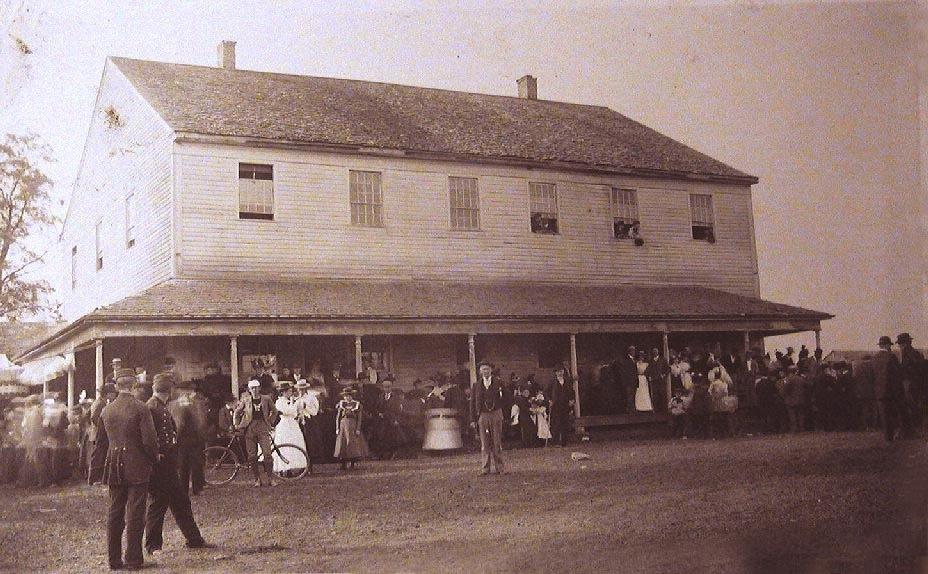
The 1816 Farmington Quaker Meetinghouse is the focus of a major community preservation effort designed to stabilize and preserve the building, restore it to its historic appearance, and donate it to an appropriate historical agency for use as an educational and tourism center to interpret the nationally important history of Farmington as a site important to woman’s rights, Quakers and Native Americans, and abolitionism and the Underground Railroad, reflecting national debates about American ideals of equality.

National Importance of This Building

The 1816 Farmington Quaker Meeting is nationally important for its association with major reform movements before the Civil War, including the woman’s rights movement, Native American rights, and the Underground Railroad. Famous Americans associated with this meetinghouse include Lucretia Mott, Austin Steward, Elizabeth Cady Stanton, and Susan B. Anthony.

As an 1816 building, this meetinghouse is perhaps the largest pre-canal building in central and western New York. It is also the second earliest known Quaker meetinghouse still standing west of the colonial settlement area in the U.S. Twenty-five Quaker meetings from all over western New York, Ontario, and Michigan originated from Farmington meeting.

The 1816 Farmington Quaker Meetinghouse was a center for debates about woman’s rights. In 1838, Genesee Yearly Meeting of Friends at Farmington stated that “men’s and women’s meetings for discipline stand on equal footing of common interest and common right.” In 1848, Quakers at Farmington formed the Yearly Meeting of Congregational Friends, in which men and women, blacks and whites met together on a basis of complete equality, joined not by creeds but by “practical righteousness.” At least one-quarter of the signers of the Declaration of Sentiments at the first woman’s rights convention at Seneca Falls in July 1848 came from Farmington Quarterly meeting. Elizabeth Cady Stanton spoke in this meetinghouse in October 1848, and Susan B. Anthony spoke here in 1873 at the time of her trial for voting.

The 1816 Farmington Quaker Meetinghouse represents the historic relationship of mutual respect between Quakers and Native Americans. In 1838, after the loss of all Seneca lands in the Treaty of Buffalo Creek, Seneca chiefs and clan mothers appealed here for Quaker assistance. With Quaker help, Seneca people negotiated a compromise treaty in 1842, retaining homelands at Allegany and Cattaraugus. “We pulled the strings and the world’s people danced,” said one Quaker.

The 1816 Farmington Quaker Meetinghouse was a nationally important Underground Railroad center. As early as 1815, freedom seeker Austin Steward stayed with the Otis Comstock family in Farmington and most likely helped build this meetinghouse. From the 1830s through the 1860s, Farmington families worked closely with an Underground Railroad network associated with Frederick Douglass and Amy Post in Rochester and William Chaplin in Washington, D.C. Freedom seekers William Wells Brown and Sarah and Emily Edmonson lived for a time in Farmington.


Economic Importance


Because of the national importance of this building, the 1816 Farmington Quaker Meetinghouse will provide a source of economic development to Farmington and central New York through heritage tourism. The meetinghouse will be a key link on:
  • National Park Service’s proposed Votes for Women Trail
  • National Park Service’s Underground Railroad Network to Freedom
  • Heritage New York’s Underground Railroad Trail, and
  • Heritage New York’s Women’s History Trail
The building also relates to the story of the Seneca Nation, told at nearby Ganondagon Historic Site.

Board puts off razing of Quaker house

by James Goodman,
(May 23, 2007) — The Farmington Town Board has agreed to postpone indefinitely demolition of a historic Quaker meetinghouse while fundraising efforts to save the deteriorating structure continue.

Full article...

Wonderful News!

by Judith Wellman

Our National Register of the Farmington Quaker Crossroads Historic District nomination received the approval of the New York State Review Board yesterday [March 16, 2007] with the full support of all board members present! It is now listed on the New York State Register of Historic Places and will be on its way to Washington on Monday, where it will be reviewed and hopefully added to the National Register of Historic Places by April 26, 2007. This is the day that our application for the Save America’s Treasures grant is due. This National Register listing is so important, because it is the basis for all major state and federal grants.

This nomination and listing has been possible not only because of the national significance of this district’s history but also because of the hard work of Mark Peckham of the Office of Parks, Recreation, and Historic Preservation; the research of Charles Lenhart and others; the Chace Fund of Philadelphia Yearly Meeting, which supported this research with a grant last year; and the support of so many of you who have written letters and signed petitions on behalf of this district, including the Town of Farmington, Farmington Quaker Church, North Farmington Cemetery Association, and many other groups and individuals. Many, many, many thanks. This district is a tribute to all of you!

A Trip to Washington, D.C. On March 1, Rich Regen, Billie Luisi-Potts, and Judith Wellman took the early morning red-eye flight from Rochester, New York, to Baltimore-Washington International Airport and then the Amtrak to Washington, D.C., where we met with Fiona Lawless of Save America’s Treasures and Kate Beale and Danielle Kline in Senator Clinton’s office. We explored both a Save America’s Treasures grant and a specific appropriations for the 1816 Farmington Quaker Meetinghouse. Both meetings were very encouraging, and we thank our hosts so much for their warm welcomes. As a result, we have requested an appropriations from Senator Clinton’s office, and we will write a grant for Save America’s Treasures for $700,000 to help restore the 1816 Farmington Quaker Meetinghouse. We will also be working on matching grants for these funds.

These grants will go toward stabilizing the basic meetinghouse structure, moving the building onto its new foundation, rebuilding the small building at the rear that was used for small meetings of ministers and elders, and restoring the exterior of the original building. The rebuilt small structure at the rear can then be used as a visitors’ center to house bathrooms, a small exhibit area, and a gift shop. Interior restoration will be a third phase.

See photo above for your intrepid advocates in Washington. What a privilege it is to connect the nationally important themes related to the Farmington meetinghouse with the same themes in our nation's capital, just as people did before the Civil War.

Talk on Quaker History and Farmington Meetinghouse. On April 16, Judith Wellman will be speaking at Representative Meeting of New York Yearly Meeting at Chautauqua on the history of Quakers in Farmington-Scipio Quarterly Meeting, highlighting events at Farmington and Scipio as they reflected women’s rights, Seneca Indian rights, and abolitionism and the Underground Railroad, with a focus on the 1816 Farmington Quaker Meetinghouse.

So far, we are right on track with our projected plan. Moving right along, in harmony! Peace and joy to you, to those you love, and to all those who love the ones you love, and so it goes around the world.

Joseph John Gurney in Farmington

After 1828, the 1816 Quaker meetinghouse became officially a Hicksite (Quaker) Meetinghouse, but Orthodox Friends continued to use it for large gatherings.

In 1841, British Friend Joseph John Gurney traveled through the U.S. Gurney, son of a wealthy Norwich banker, was an aristocrat and a philanthropist, devoted to antislavery. He visited dignitaries in Washington, including the British ambassador, Senator Henry Clay, Senator John C. Calhoun, and Chief Justice Roger B. Taney, trying to convince them that slavery could successfully be abolished, as the British had abolished it in the West Indies.

He also traveled throughout U.S. When he went west across upstate New York, he stopped in Farmington. There he spoke to “a large settlement of Friends.” “Great was the multitude of persons, including many of the Hicksite denomination,” he wrote, “who flocked to our meeting both in the morning and afternoon.” He held several meetings among this “sturdy, intelligent, and prosperous people,” including one in the Hicksite meetinghouse. He had “a memorable time; two large overflowing meetings; that in the afternoon, from the pressure of the multitude, held in the Hicksite meeting-house,” he noted in his journal. “ I think they were good times,” he added, “the truth being triumphant, and Christ fully preached.” [1]

Gurney spent the evening with a “veteran minister” (probably Caleb McCumber), “whose sterling good sense, comprehensive views of Christianity, and fervent piety, are not the less striking for the perfect originality and even quaintness of his manners and appearance.” Gurney, a British aristocrat, could not resist adding that “I give this brief description of our friend because it characterizes the effect produced by divine grace in the midst of he hardy discipline of these rough regions.” When Elizabeth Cady Stanton visited England on her honeymoon the following year, she and her husband Henry B. Stanton stopped to visit Joseph John Gurney. “We spent a few days with John Joseph Gurney at his beautiful home in Norwich,” Stanton remembered in her autobiography. “He had just returned from America, having made a tour through the South. When asked how he liked America, he said, ‘I like everything but your pie crust and your slavery.’"

[1]Joseph John Gurney, A journey in North America, described in familiar letters to Amelia Opie (Norwich [England]: J. Fletcher, 1841), 308-9; Joseph John Gurney, Journal, Rochester, New York, 7 Mo. 28, 1839; Joseph Bevan Braithwaite, ed., Memoirs of Joseph John Gurney (Norwich [England]: Fletcher and Alexander, 1854), 2:173.

Lessor-Known Figures Associated with Farmington

Also important, although less well known, were:
  • Caroline C. and William G. Barker (Farmington Quakers, signers of Seneca Falls Declaration of Sentiments)
  • Josephine Brown (African American author) lived in Farmington as a girl
  • Darius and Otis Comstock (Farmington Quakers, major Underground Railroad supporters)
  • Daniel and Mary Anthony (members of Farmington Quarterly Meeting, abolitionists and woman’s rights supporters), Susan B. Anthony’s parents
  • Elias J. and Susan Doty (Farmington Quakers, signers of Seneca Falls Declaration of Sentiments)
  • Jacob Ferris (Farmington Quaker abolitionist lecturer)
  • Sunderland P. Gardner (Farmington Quaker minister for 42 years, who preached widely throughout the U.S. and Canada)
  • Cassandra Green Hathaway (Farmington teacher, abolitionist, and woman’s rights activist)
  • Esther Hathaway (Farmington abolitionist and Underground Railroad, friend of Frederick Douglass)
  • Phebe Hathaway (Farmington abolitionist organizer and Underground Railroad supporter, friend of Frederick Douglass)
  • Anson S. Lapham (founder of Friends Historical Library, Swarthmore College)
  • Pliny Sexton (Farmington Quaker, abolitionist, Underground Railroad activist, attended national woman’s rights conventions)
  • Asa B. Smith (Farmington Quaker, abolitionist, Underground Railroad activist)
  • Catharine Fish Stebbins (born in Farmington, Quaker abolitionist, signer of Seneca Falls Declaration of Sentiments, friend of Sojourner Truth)
  • Maria E. Wilbur (Farmington Quaker, signer of Seneca Falls Declaration of Sentiments).

Important Regional and National Reformers Associated with Farmington

by Judith Wellman, with help from Charles Lenhart and Chris Densmore.

  • Susan B. Anthony (Quaker and major woman’s rights leader) spoke in this 1816 meetinghouse in 1873, at the time of her trial for voting
  • William Wells Brown (freedom seeker from Kentucky) lived in Farmington from 1844-46 and wrote his autobiography there
  • Eliab W. Capron (Farmington Quaker, editor, and signer of Declaration of Sentiments at Seneca Falls woman’s rights convention)
  • William Chaplin (major Underground Railroad activist and editor, whose capture in Maryland in 1850 became a focal point of national abolitionist activity)
  • Griffith Cooper (Farmington Quaker, Indian rights activist, and Underground Railroad supporter)
  • Frederick Douglass (one of the nation’s most important abolitionist editors, lecturers, and freedom seekers) spoke many times in Farmington
  • Mary and Emily Edmondson (escaped from slavery after being captured on the Pearl in1848) lived in Farmington before receiving help from Harriet Beecher Stowe to attend Oberlin College
  • William Lloyd Garrison (outspoken editor of Boston-based Liberator and anchor of American Anti-Slavery Society) spoke in Farmington
  • Joseph John Gurney (British Quaker abolitionist) spoke in Farmington
  • Joseph C. Hathaway (Farmington Quaker, lecturer, Underground Railroad supporter, President of Western New York Anti-Slavery Society, President pro tem of first national women’s rights convention in Worcester in 1850)
  • Elias Hicks (national Quaker reformer) spoke in Farmington
  • Thomas M’Clintock (Quaker abolitionist, woman’s rights advocate, Underground Railroad supporter, organizer of Congregational Friends in Farmington, 1848)
  • Myrtilla Miner (set up nationally known school for African American girls in Washington, D.C., based in part on Farmington model)
  • Lucretia Mott (nationally known Quaker minister and reformer) spoke many times in Farmington
  • Lindley Murray Moore (Clerk of Farmington Quarterly Meeting, Orthodox, and President of Haverford College, 1848-52)
  • Amy Post (member of Farmington Quarterly meeting, major woman’s rights activist, abolitionist, and Underground Railroad supporter)
  • Gerrit Smith (nationally known abolitionist leader, nominated for President by the Liberty League, meeting just north of Farmington in 1848)
  • William R. Smith (nationally important Underground Railroad activist, mentioned in Josiah Henson’s autobiography, ran for Governor of New York State as the Liberty League candidate in 1852)
  • Elizabeth Cady Stanton (major woman’s rights leader and organizer of Seneca Falls convention) gave her second major woman’s rights speech in 1816 Farmington meetinghouse
  • Austin Steward (nationally important freedom seeker and African American leader) lived in Farmington from 1815-1818

Update on 1816 Farmington Meetinghouse

by Judith Wellman

Thank you! On December 18-19, the meetinghouse was all wrapped up, in a large net, like a gift to the future. Thanks to all of you who helped raise funds and lent your moral support for this effort, as well as to the work of Mike Perkins, contractor, and Matthew Abate, engineer. This will keep pieces of the meetinghouse from blowing off into the road and also give the building some minimal protection from the elements, while we continue to work on its National Register nomination and on fund-raising.

We so grateful to all of you who came forward with financial help and warm thoughts. This could never have been done without you. You were truly an inspiration, and you have made a gift to the health of the world.

We are finishing work on the National Register nomination this month. This will be a nomination for the Farmington Quaker Crossroads District, incorporating several sites at the four corners, including the 1816 meetinghouse, the 1876 meetinghouse, the cemetery, and others. For a list of important people associated with this area, see the bottom of this newsletter.

Primary source evidence continues to accumulate about people and events related to both the 1816 and the 1876 meetinghouses. Charles Lenhart has done an extraordinary amount of research for this project, and Christopher Densmore, Curator of Friends Historical Library, has been immensely helpful. Barbara Shanahan has sent three historic photos of the meetinghouse, including one interior photo that has not been available earlier. She identified her great-great-grandfather Nichols as the white-bearded man in the black hat in the back row of one of the interior photographs. Thank you, Barbara!

Fund-raising continues. Special thanks to Eric Moon and to Canandaigua National Bank for their sales of the CD Christmas in the Finger Lakeson behalf of the 1816 Farmington Quaker Meetinghouse. This is exactly the kind of creative grassroots effort that makes us all proud!

Ruth Naparsteck has come up with a similar project for the spring. She has offered sales of her books on Rochester history for $39.95 each (plus $3.95 s/h), Let Ruth know that you heard about this offer through this blog, and she will donate $10 per book to the Farmington Meetinghouse Fund.

The titles are: Rochester: A Pictorial History and Runnin' Crazy: A Portrait of the Genesee River. Books can be ordered directly from Ruth at: uramouse1@hotmail.com Total cost for both books plus shipping/handling: $87.80. Thank you, Ruth!

We will be submitting grant proposals for several major grants this spring, including:
  • Restore New York
  • Save America’s Treasures
  • Environmental Protection Fund
for major restoration and other funds for smaller pieces of the project.

Thanks to Peter Michael for national publicity through the Underground Railroad Free Press, November 2006. Thank you, Pete!

Upcoming event:
Frederick Douglass International Underground Railroad Conference from September 28 to 30, 2007 in Rochester, New York.

Farmington Meeting House Underground Railroad Site Saved

(reproduced from The Underground Railroad Free Press, volume 1, issue 3, November 2006)

In the nick of time, a group of preservationists in upstate New York has stepped in to prevent demolition of a former Quaker Meetinghouse used as an Underground Railroad safe-house. The Farmington, New York meeting house was on its last legs when the group led by local Underground Railroad historian Judith Wellman organized in early 2006 and got to work.

Within six months, fundraising began, the old building was saved from what had been an imminent razing, and it was structurally stabilized and listed on a national Underground Railroad site list. Plans are to restore the building to its original appearance and donate to an organization which will preserve and operate it as an Underground Railroad interpretive center.

Farmington and towns near it in this part of New York are as rich as anywhere in the nation in the history of the Underground Railroad and abolitionism. The area also spawned the women's rights movement. Farmington, a village of about 100, is forty miles from the Harriet Tubman home in Auburn, New York.

Restoration of the Farmington Meeting House has been aided financially by the Heritage New York Women's History Trail, the National Trust for Historic Preservation, the New York State Arts Council and the Quaker Church.

In the News

Quaker meetinghouse gets reprieve


(May 24, 2007) — The Farmington Town Board has agreed to postpone indefinitely demolition of a historic Quaker meetinghouse while fundraising efforts to save the deteriorating structure continue.
"They're moving forward with an honest effort to get funds," said Farmington Supervisor Ted Fafinski about the board's decision Tuesday night.....

Events of 2006

In February 2006, the east wall blew off the meetinghouse. Approximately eighty percent of the original fabric remained, including much of the plastered interior, octagonal columns, and most of the frame, but it was entirely exposed to the weather, creating an emergency situation.
Working with nationally known architect John G. Waite, people in Farmington and across the nation raised $26,000 from both private and public sources. They transferred the building to the Elizabeth Cady Stanton Foundation. And they began emergency stabilization and initial documentation. Supporters included:
•National Trust for Historic Preservation
•Heritage New York’s Women’s History Trail
•New York State Council on the Arts
•Chace Fund of Philadelphia Yearly Meeting)
•many private donors.
Save America’s Treasures declared this building an official project. The National Park Service’s Network to Freedom project listed it as an important Underground Railroad site. The State Historic Preservation Office declared the meetinghouse eligible for the National Register of Historic Places as part of a local historic district, to include the 1876 Quaker Meetinghouse and Quaker cemetery across the road. People of Farmington are working to donate 3.5 acres of land within this historic district as a permanent location for the building. The total cost of this project, based on initial projections, will be upwards of $1,000,000.

Fund-raising

  • National Trust for Historic Preservation provided funds for emergency stabilization.
  • Heritage New York's Women's History Trail provided $5000 for initial stabilization.
  • New York State Council on the Arts Technical Assistance program provided a technical assistance grant.
  • Chace Fund of Philadelphia Yearly Meeting provided funds to help document the building with photographs and HABS- quality drawings.
  • many private donors have contributed funds.
  • many volunteers have been extraordinarily generous volunteer with their time, money, and resources, including
  • architectural services, web design, historical research, fund-raising, and land for a permanent site for the meetinghouse.
  • Eric Moon has created a CD called "Christmas in the Finger Lakes," which will be sold through branches of the Canandaigua National Bank, with half the proceeds to be given to the 1816 Farmington Meetinghouse project. The CD is available at the following branches: Bloomfield, Canandaigua Main St., Canandaigua Lakeshore Dr., Farmington, Honeoye, Shortsville-Manchester and Victor.

Stabilization and Restoration

  • Stabilization and Restoration nationally-recognized architect John G. Waite, John G. Waite Associates, has begun documentation and has provided a plan for stabilization and initial restoration.
  • the damaged southeast corner of the building has been stabilized, with assistance from engineer and contractor, with cables and supports.
  • a six-foot fence has been erected around the meetinghouse the Farmington Town Board and Code Enforcement officers have helped us with issues relating to public safety.
  • a local insurance agency provided insurance for the building.

Public Support For This Project

•the National Park Service’s Network to Freedom program has listed this building as a site important to the Underground Railroad (approved September 13, 2006).

•Save America’s Treasures has listed this building as an official project.

•Elizabeth Cady Stanton Foundation (P.O. Box 603, Seneca Falls, N.Y., 13148), a 501c3 organization, agreed to take ownership of the building until an appropriate historical agency can be found to hold it on a long-term basis.

•NYS Office of Parks, Recreation, and Historic Preservation has declared the meetinghouse eligible for the National Register, part of a historic district to include the 1876 Quaker meetinghouse, cemetery, original site of the meetinghouse next door, and future site of the meetinghouse across the road;

about 125 people are now on a listserv of support for this project.

•volunteers created this website for the meetinghouse

•Farmington Town Board passed a resolution of encouragement for this project, September 13, 2006.

•Church Women United of New York State Board passed a resolution of support for this project, October 2006.

•several local groups have signed petitions in support of this project.

•a national Advisory Board has provided support and expertise.

1816 FARMINGTON MEETINGHOUSE RESOLUTION OF SUPPORT


Whereas, New York State before the Civil War was a crucible of reform, at the cutting edge of nationally important reform movements dedicated to equality and respect for all people;

Whereas, these reform movements challenged Americans to consider the essential meaning of democracy in the new Republic, as stated in the Declaration of Independence: “that all men are created equal, that they are endowed by their Creator with certain inalienable Rights, that among these are Life, Liberty, and the pursuit of Happiness.--That to secure these rights, Governments are instituted among Men, deriving their just powers from the consent of the governed”;

Whereas, Quakers and others from across New York State and the nation, meeting at Farmington, were at the center of these nationally significant debates (helping to organize the 1848 Seneca Falls woman’s rights convention, developing a national crossroads for the Underground Railroad, and enhancing the relationship of mutual respect between Quakers and Native Americans);

Whereas, the 1816 Farmington Quaker Meetinghouse, the earliest known Quaker meetinghouse still standing west of the colonial settlement line, represents an opportunity to interpret these nationally significant issues and events in the present world;

Whereas, the 1816 Farmington Quaker Meetinghouse has received considerable support from national, state, and private groups—including the National Trust for Historic Preservation, Heritage New York Women’s History Trail, the Chace Fund of Philadelphia Yearly Meeting, the Elizabeth Cady Stanton Foundation, and an Advisory Board made up of historians, preservationists, and descendants of people involved with reform movements—as well as from nationally known architect John G. Waite;

Whereas, the restored 1816 Farmington Quaker Meetinghouse will provide a source of economic development through heritage tourism to the Town of Farmington, connecting Farmington to the National Park Service’s Underground Railroad Network to Freedom, the National Park Service’s proposed Votes for Women Trail, the Heritage New York Underground Railroad Trail, and the Heritage New York Women’s History Trail;

We therefore support the plan to keep the 1816 Quaker Meetinghouse in Farmington as a nationally important historic site, one of the crucibles of America’s dialogue about the essential meaning of the Declaration of Independence, to restore the meetinghouse to its historic appearance, and to donate it to the National Park Service or another appropriate historical agency for use as an educational and tourism center to interpret the nationally history of Farmington as a site important to woman’s rights, Quakers and Native Americans, and the Underground Railroad, as they reflected national debates about American ideals of equality.

Latest News

October 25, 2007
Posted by Quakers in the News

Kuhl seeks to preserve Farmington meetinghouse
Elmira Star-Gazette, NY - Oct 12, 2007
U.S. Rep. John R. Kuhl Jr., R-Hammondsport, introduced legislation to request that the National Park Service consider the 1816 Farmington Quaker Meetinghouse as a possible addition to the National Park Service, as part of the Women's Rights National Historical Park.

"The Farmington Meetinghouse was very important to the early women's rights movement, Native American rights, and abolitionism and the Underground Railroad,” Kuhl said. “This legislation will ensure that this nationally significant site is enjoyed for many more generations to come.”

Built in 1816 to replace earlier 1796 and 1804 buildings, this meetinghouse is known as the earliest Quaker meetinghouse still standing west of the colonial settlement area in the country. As a crucible of several national reform movements, the 1816 Farmington Quaker Meetinghouse was the stage for many debates over freedom and equality for women, African Americans, and Seneca Indians in upstate New York and around the nation. National reformers associated with this meetinghouse include William Lloyd Garrison, Lucretia Mott, Frederick Douglass, William Wells Brown, Elizabeth Cady Stanton, and Susan B. Anthony.

The meetinghouse has become the focus of a major community preservation effort after the east wall was blown off in February 2006. Kuhl is working with architect John G. Waite, local community organizations, and New York State politicians to raise the $1.5 million needed to restore the building. Kuhl has also requested a reconnaissance study and preliminary resource assessment to enhance the protection available for the historic building and to help develop an appropriate plan for the preservation of this structure.

The Meetinghouse is currently listed on the National Register of Historic Places as part of the Farmington Quaker Crossroads District. In September 2006, the National Park Service added the 1816 Farmington Quaker Meetinghouse to its Underground Railroad Network to Freedom for its importance to the Underground Railroad. In April 2007, the National Register of Historic Places added the Meetinghouse to the National Register at the national level of significance for its national importance in reform movements.


-------

May 24, 2007

Posted by Quakers in the News

Quaker meetinghouse gets reprieve

(May 24, 2007) — The Farmington Town Board has agreed to postpone indefinitely demolition of a historic Quaker meetinghouse while fundraising efforts to save the deteriorating structure continue.

"They're moving forward with an honest effort to get funds," said Farmington Supervisor Ted Fafinski about the board's decision Tuesday night.....


-------
January 4, 2007
Posted by Quakers in the News
Quaker History/Meetinghouse/Restoration//People, developments to watch in 2007/Rochester Democrat and Chronicle/Rochester/NY/USA/31-Dec-06/In Farmington, a Quaker meetinghouse — built 190 years ago — was in such bad shape that it was slated for demolition. The Town Board, however, has allowed the building to stand at least until the end of May as preservationists try to raise the funds needed for restoration., ...

-----

December 5, 2006
Posted by Quakers in the News
Quaker History/Underground Railroad/Abolition/Suffrage/Wrecking ball looms again/Rochester Democrat and Chronicle/Rochester/NY/USA/6-Dec-06//(December 5, 2006) — FARMINGTON — Judith Wellman used to drive by the historic Quaker meetinghouse in Farmington wondering what could be done to save this ...

________

November 16, 2006

Much has happened since May! Basically, people in Farmington have embraced this project, and we have had welcome support from both the Office of Parks, Recreation, and Historic Preservation and the National Park Service's Network to Freedom program.

We are, however, facing a major deadline to stabilize the building further before November 30, and we need to find money quickly to do it. Click here for details.

A. THE GOOD NEWS:
1. In June, we were delighted to learn that people in Farmington wanted to keep this meetinghouse as part of the heart and soul of Farmington's history. Farmington Friends Meeting is working on plans to donate land near the original site of the 1816 meetinghouse and the current site of the 1876 meetinghouse for its permanent home. Should this plan fall through, supporters in Seneca Falls and Waterloo stand ready to welcome this meetinghouse at the site of Junius Monthly Meeting of Friends, but we are very hopeful that the meetinghouse will remain in its historic home in Farmington, surrounded by homes of Quakers and Underground Railroad supporters who originally organized this meeting and built the meetinghouse.
2. In August, with funding assistance from the Heritage New York Women's History Trail and the National Trust for Historic Preservation and technical expertise from Matthew Abate, engineer, and Michael Perkins, contractor, supervised by John G. Waite, architect, we stabilized the fragile southeast corner of the meetinghouse with cables and supports.
3. With help from the technical assistance program of the New York State Council on the Arts and the Chace Fund of Philadelphia Yearly Meeting of Friends, Jack Waite, architect, has begun basic documentation for the exterior of the meetinghouse, with drawings and photographs. Bruce Harvey, Senior Cultural Resource and Licensing Specialist, Kleinschmidt Energy & Water Resource Consultants in Syracuse, volunteered his expertise to do HABS-quality photographs.
2. In September, the Farmington Town Board passed a resolution of support for the project. Many thanks to the Town Board for this. If you belong to a group who would like to support this project by passing a similar resolution of support, this would be most welcome. (See attached draft.)
2. Mark Peckham, from the Office of Parks, Recreation, and Historic Preservation, visited the meetinghouse on August 24 and recommended that we nominate the building to the National Register as part of a small historic district, encompassing also the 1876 meetinghouse and cemetery across the street, the original site, and the proposed new site across the street. Many thanks to Mark for making this special visit to Farmington and for this very creative suggestion. We will nominate the building to the Register in time for consideration at the next meeting (March) of the State Board.
3. The National Park Service's Network to Freedom accepted the meetinghouse to its program. Network to Freedom coordinators visited the site on September 14. Marie Parsons gave a brief and lovely program, with readings from historic people involved with the meetinghouse, Charles Lenhart provided refreshments, and several people from Farmington Friends acted as hosts. Many thanks to Farmington Friends for letting us use their meetinghouse. And many, many thanks to the Network to Freedom for accepting this historic meetinghouse, with its nest of Underground Railroad activists, to the Network to Freedom. This will help bring national recognition to a building that increasingly seems to have been a very important national node on the Underground Railroad.
4. We nominated the meetinghouse to the Seven to Save program of the Preservation League of New York State. Many thanks to Cynthia Howk of the Landmarks Society of Western New York for her letter of support.

B. IMMEDIATE NEED--DEADLINE OF NOVEMBER 30.

Although we have stabilized the southeast corner, concerns remain about the rest of the framing structure. Last spring, we planned to dismantle the building by September 15, in order to move it to Waterloo. Now that the building will remain in Farmington, however, we can begin restoration and further stabilization at the current location, so the building can be moved in its entirety to its new nearby site.
Architect John G. Waite has developed a plan for repairing the framing timbers (using chemical consolidants, "dutchman" replacement pieces, and the complete replacement of timbers, if needed) so that we can save as much of the existing plaster, lathe, roof sheathing, and exterior walls as possible. Estimated cost is $75,000.
Working with Floyd Kofaul, Farmington Code Enforcement Officer, the Farmington Town Board has extended the deadline for beginning this work to November 30, to allow us time to raise further funds.
We are looking at several sources--both public and private--for this immediate need. THIS IS EXTREMELY IMPORTANT! Any help in locating funds is much appreciated.

C. A RESEARCH NOTE

James Nichols, Clerk of Syracuse Monthly Meeting, reports that "the White Brick Meetinghouse in Waynesville, OH was apparently built in 1811 to be the home of Miami Quarterly Meeting and it continues in use as a meetinghouse for Miami Monthly Meeting of Ohio Valley YM. Their claim is that they are the oldest extant building for worship west of the Alleghenies." So the 1816 Farmington meetinghouse is now the second oldest known extant meetinghouse west of the colonial settlement line in the U.S. Thanks to Jane Zavitz-Bond, we also know of one older, 1812, in Ontario. Thank you, Jim!

Update 9

WORK SCHEDULE. We were not able to find someone to dismantle the meetinghouse as per our original schedule, so we are working on Plan B. With the gracious agreement of the Farmington Town Board, we will stabilize the building beginning next week, document it as thoroughly as possible while it is still standing, and dismantle it later this summer. We are currently in the process of getting liability insurance for the building so that the Elizabeth Cady Stanton Foundation can (finally!) take ownership of it and work can begin. Many thanks to all who are making this possible.

CONDITIONS ASSESSMENT/BUILDING INTEGRITY. We are blessed to have the help of John G. Waite, architect, who came on May 9 with two people from his office, Bill Brandow and Jessica Malarik, to measure the building, do preliminary sketches, and take photographs. The building is 60 feet three inches x 47 feet in its exterior measurements. As per a suggestion by Mark Peckham, from the Office of Parks, Recreation, and Historic Preservation, we are wondering whether this may be one of the largest (if not the largest) extant pre-canal buildings in upstate New York. Can anyone think of a larger one?
As the building stands, you can clearly see outlines of the old gallery on three sides. Pieces of benches, stair railings, the divider between men's and women's meetings, and other interior features are visible. We are delighted to know that much more of the original fabric of the building remains and can probably be saved than we had originally thought. So the extra time that the building stands will be very helpful for documenting the structure. Stephen Spaulding, of the northeast regional office of the National Park Service, has been extremely helpful with technical advice. Thanks also to Bruce Harvey, of Kleinschmidt Energy and Water Resource Consultants, who has taken HABS quality photos of the exterior of the building.

HISTORICAL DOCUMENTATION. Charles Lenhart and Helen Kirker videotaped an interview with Gus Wehrlin, who as a child witnessed the actual moving of this meetinghouse in 1927. They are also interviewing other local people who attended annual meetings of Friends ("Quaker Days") in this meetinghouse. We have searched the Accessible Archives database of African American newspapers for all references to Farmington. Charles Lenhart has also worked with local historians in Macedon and Margaret Hartsough of Farmington to find material from local newspapers and photographs. Christopher Densmore has contributed photographs and much printed material from Friends Historical Library at Swarthmore and from his own research. Local people have found references in family diaries to speeches in the meetinghouse by Frederick Douglass, William Lloyd Garrison, and Susan B. Anthony. Several people have told us about benches, stoves, or other artifacts related to the meetinghouse. Many, many thanks to all of you who have shared this material. If others find references to the Farmington Meetinghouse, we much appreciate knowing about them.

FUNDING. Because much of the documentation for this building will take place before it is dismantled (instead of afterwards, as we had originally planned), and because much more can be saved than we had originally anticipated, we will have to spend money now that we thought we could defer until the building was dismantled. Upfront costs will be in the range of $75,000 or more, instead of $35,000 that we had originally estimated.
We now have potentially $25,000 (about $12,000 from private donations, $5000 from Heritage New York's Women's History Trail, $1500 from the New York State Council on the Arts, $1500 from the National Trust for Historic Preservation, and, we are hopeful that we will have $5000 soon from another grant.)
The member item we have requested through Senator Nozzolio's office ($75,000) would be a wonderful step forward for this project.
We are also developing plans to raise money to rebuild the meetinghouse. We are looking forward to a creative combination of private and public monies and appreciate any ideas that any of you may have. All suggestions are welcome!
Donations large and small may be sent to:
Elizabeth Cady Stanton Foundation
P.O. Box 603
Seneca Falls, New York 13148

1816 Farmington Meetinghouse Fund

THANK YOU! Several interested people showed up to look at the meetinghouse on May 9, including Liseli Haines and her son Alex from Hamilton, New York, and neighbor Bob Wilton, who reported that a car had hit the southwest corner of the meetinghouse in an accident several years ago, which may explain why this corner was weaker than the others. Mr. Wilton also brought a marker with the name of John Van Lare on it. Mr. Van Lare is the farmer who moved the meetinghouse when it became a barn in 1927. One of the potato crates also had John Van Lare's name on it.

Thanks to everyone, including the Wiltons, the Stanton Foundation, and the Farmington Town Board, for your patience and your concern for this important building.

We'll keep you posted. If you are of Quaker persuasion, we ask that you hold all concerned with this project in the Light.

Previous Post

Update 8

Hello Friends--
This has been a momentous week for the Farmington Meetinghouse!

1. SIGNING CONTRACTS! We expect that next Tuesday, May 2, 2006, we will transfer the building from the current owners, Lyjha and Jillian Wilton, to the Elizabeth Cady Stanton Foundation. Many, many thanks to the Wiltons for maintaining this building for future generations and to the Stanton Foundation for its willingness to assume responsibility while we work to find a permanent site. Without both of you, this building--with its nationally important stories of abolitionism, the Underground Railroad, Seneca land rights, and women's rights--would be lost.
Architect Jack Waite has put out bids for this project, and we hope to be able to review them in time to sign a contract on Tuesday with whomever will be doing the actual work on this building.

2. FUND-RAISING.
a. The National Trust for Historic Preservation has donated $1500 from its emergency fund to help us document, dismantle, and move this building! Many, many thanks for this very welcome contribution.
b. We now have about $18,750 (in private donations, as well as from the Heritage New York Women's History Trail, the New York State Council on the Arts, and the National Trust) toward the needed $35,000. We still need $16,250. We also have an outstanding application for a $5000 grant to the Chace Fund of Philadelphia Yearly Meeting for documenting this meetinghouse.
Donations may be sent to:
Elizabeth Cady Stanton Foundation
P. O. Box 603
Seneca Falls, New York 13148
Farmington Quaker Meetinghouse Fund

Thank you all who have helped to support this project so far. Because of the need to move this building, beginning by May 3, timing is short for us to raise this money. We appreciate all of you so much who care about this building and all that it represents.

3. PUBLICITY The Google search algorithm counts links to blogs and web-sites. You can help others find this blog by including a link to http://farmingtonmeetinghouse.blogspot.com from your web-site.

-------------
Discovering extraordinary people and places in time.
"All men and women are created equal." Declaration of Sentiments, Seneca Falls, 1848
"Right is of no sex. Truth is of no color." Frederick Douglass. North Star, 1848

Previous Post

Update 7

Historic Farmington Meeting House, April 18, 2006 April 19, 2006
Good morning, Friends!

1. All contributions to the meetinghouse fund are welcome! We are still trying to raise $35,000 to pay the costs of dismantling and initially documenting this building. So far, we have raised almost $17,000, enough to begin work. We would like to transfer this meetinghouse to the Elizabeth Cady Stanton Foundation and sign a contract with the mover sometime next week. In order to do this, however, we need to know that we can pay this mover in full, when the contract comes due. Some of us have agreed to guarantee this personally, but we are hoping that we do not have to mortgage the house, literally, to make good on this!

Contributions may now be sent to:
*Elizabeth Cady Stanton Foundation*
* P.O. Box 603*
* Seneca Falls, New York 13148*
* c/o Francis Caraccilo, Treasurer*
* 1816 Farmington Meetinghouse Fund*

2. Yesterday, Lyle Jenks, from the Chace Fund of Philadelphia Yearly Meeting, came to review the meetinghouse and our application for funding for its documentation according to Historic American Building Survey standards. It was a beautiful spring day, and we had a thorough and productive discussion of our progress. Many thanks to Lyle and all members of the committee.

3. Many thanks to a good friend and fellow preservationist from the Preservation Association of Central New York, who just sent $250 to the meetinghouse fund! (There is a connection between Quakers in Onondaga County and those in Farmington. At one time, many people in Skaneateles Quaker Meeting (Orthodox) in Onondaga County were extremely active abolitionists and Underground Railroad supporters. As a result of a survey of sites relating to
the Underground Railroad, Abolitionism, and African American Life (sponsored by the Preservation Association of Central New York and funded by the Preservation League of NYS and the NYS Council on the Arts), the home of Quakers James Canning Fuller and Lydia Fuller on Genesee Street in Skaneateles was listed on both the National Register and the National Park Service's Network to Freedom as an Underground Railroad safe house.)

4. Above is a photo of the meetinghouse, taken yesterday from the northeast, for inspiration.

Best, Judy Wellman for the Ad Hoc Committee to Preserve the 1816 Farmington Meetinghouse

Last Previous Update

Update 6

April 16, 2006

Hello Friends! Here is an update on the Farmington Friends' Meetinghouse.
1. TRANSFER OF THE MEETINGHOUSE TO ELIZABETH CADY STANTON FOUNDATION. Many thanks to the Stanton Foundation of Seneca Falls for its willingness to assume ownership of this building while we are looking for a permanent home, and many thanks to the current owners for working with us to make this possible. We hope to have this building transferred by the middle of next week.
2. CONTRACTING WITH MOVERS. At this same time that we transfer the building to the Stanton Foundation, we hope to sign a contract with the contractor who will dismantle the building. Jack Waite, architect, has prepared performance specifications. These are being publicized, and bids are being solicited from interested contractors.
3. RAISING FUNDS. We need about $35,000 to carry out the initial phase of moving and documenting this building. Thanks to the help of private donors, Heritage New York Women's History Trail, and a technical assistance grant from the New York State Council on the Arts, we have now raised $16,200. We are actively soliciting further grants and welcome--most heartily--your contributions as private donors! Many, many thanks for whatever you can do!

Contributions may now be sent to:
*Elizabeth Cady Stanton Foundation*
* P. O. Box 603*
* Seneca Falls, New York 13148*
* Attention: Francis Caracillo, Treasurer*
* Farmington Quaker Meetinghouse Fund*

4. WONDERFUL LETTERS OF SUPPORT! We received three beautiful letters of support--from Old Chatham Meeting; Lyle Jenks of Philadelphia; and Christopher Densmore, Curator of Friends Historical Library at Swarthmore. We passed all of these out at the Farmington Town Board meeting last Tuesday, and they are all appear here as comments to this page. Marie Parsons of Rochester Meeting also wrote a lovely evocative essay, which is now on our website. Thank you all so much fo these!
5. Diane Plassey Gutierrez and Marie Parsons are working on a brochure to help publicize the meetinghouse project. This should be available soon for downloading and printing. We will be meeting Lyle Jenks of the Chace Fund of Philadelphia Yearly Meeting (to which we have applied for funding to help document this building) at the meetinghouse tomorrow (Monday, April 17) morning at 10:00 a.m. All are welcome to join us.
Stay tuned! We will keep you posted with breaking news! Thanks for everyone's help, in every way.

Next Previous Update

Update 5

April 9, 2006

1. Francis Caraccilo, President of the Elizabeth Cady Stanton Foundation, reports that the Foundation is ready and willing to assume ownership of the Farmington meetinghouse on an interim basis, while we dismantle and document the building and look for a final home for it. As a not-for-profit, 501c3 organization, the Foundation has a track record in dealing with a historic buildings. In the early 1980s, the Stanton Foundation purchased the Elizabeth Cady Stanton house in Seneca Falls and donated it to Women's Rights National Historical Park.

2. Jack Waite, a nationally-known preservation architect, has agreed to work with us on dismantling, documenting, and reconstructing the Farmington meetinghouse. In addition to his work on such premier buildings as Mt. Vernon and the Tweed Courthouse, Mr. Waite brings a particularly appropriate expertise for the Farmington meetinghouse. He worked on a prize-winning project to dismantle and document a Chinese temple and reconstruct it for the Peabody-Essex Museum in Salem, Massachusetts, using techniques similar to those that he will be using for the Farmington meetinghouse. (For more information, see
http:// www.jgwaarchitects.com/)

Within the next several days, we will be working with the current owner, who has been so helpful in working with us and has agreed to donate this building, so that we can move forward with plans to move it into the hands of the Stanton Foundation, hire a contractor, and begin documenting and dismantling the meetinghouse. The Farmington Town Board has requested that work begin by May 3 and be completed by June 3.

What we need:

1. Interim storage area. Thanks to the work of the Rochester and Monroe County Freedom Trail and others, we have a couple of possibilities for places where this building might be stored before it is reconstructed. We can use either of these, but neither is perfect. The ideal location would be a secure enclosed area at least 100 feet x 100 feet, where we might spread the pieces of the meetinghouse out. There, careful drawings would be made according to Historic American Building survey specifications. Parts of the building would be partially reconstructed in this space, much like a giant 3-D puzzle, before the entire structure was finally rebuilt outside. If you know of a warehouse, empty strip mall, or similar spot where we might house the pieces of the meetinghouse while work is being done, please let us know ASAP.

2. Money. We need $35,000 within the next two or three months. We currently have $13,200 ($8200 in private donations, plus $5000 from Heritage New York's Women's History Trail). Many, many thanks to these donors!
We have requested a member item through Senator Nozzolio to help with the cost of this work. Because of the pressure of time, the actual dismantling will need to be done before we know whether this member item will be available, and--if available--before we have access to it. So we are trying to raise through private donations and immediate grants the estimated $35,000 that we will actually need to dismantle the building, restore the site to a level field, and pay the architect's fees.
Your help at this time is critically needed. If you can donate to this fund, even a small amount, you will be making a contribution for that will last far beyond our generation. Please send tax-deductible donations to:
Rochester Friends Meeting
84 Scio Street
Rochester, New York 14604
Attn: Paul Michaloski
1816 Farmington Quaker Meetinghouse Fund
If Senator Nozzolio's member item does come through, we will apply this, as originally proposed, to documenting the building and preparing to rebuild it in its final location.

The Farmington Town Board will hold a public hearing on this building on Tuesday, April 11, at 7:00 at the Town Hall. All are welcome to attend.
Stay tuned for continuing reports! Thanks to everyone for all your continuing support. With your help, this building will stand for the ages, a continuing testament to the power of ideals of equality and justice for all people.

Next Previous Update